

































 Advisory Board


When you’re running a strategic planning workshop, how you start the day matters more than most people think.
The first 15–30 minutes are critical. Get that right, and the rest of the day runs better.
One of the tools I use at the start of these sessions is personality profiling, and in particular, I use Myers-Briggs [MBTI] as a conversation starter.
Even if you’re not an org psych or an expert in MBTI, the basics are all you need.
Watch the video below or keep scrolling to dive deeper.
read the room
Before the workshop even begins, I like to get a sense of the personality mix in the room.
Sometimes teams have already completed profiling tools. If not, please have them run the test as part of the prework.
I naturally gravitate towards Myers-Briggs [MBTI] – it’s simple, widely understood, and gives a good insight into how people think and interact. If you use a different personality profiling tool, no drama, keep using that one!
What I’ll often do is review everyone’s results ahead of time and then bring that into a practical exercise at the start of the session.
bring it to life
Instead of just talking about personality types, I get the group involved straight away.
For example, using the extrovert vs introvert scale, I’ll ask participants to physically line themselves up across the room, from the strongest extrovert at one end to the strongest introvert at the other.
What this does is give a clear visual of the group dynamic.
And you’ll often see it play out in real time, extroverts chatting away at one end, while introverts are quietly waiting for the next instruction at the other.
It becomes obvious, and can be funny, pretty quickly.
* Thanks to Kerryn Fewster of Change 2020 for this tip!
set the tone
It’s not just a bit of fun; it actually sets up how the day will run.
It gives you the opportunity to call things out early, like:
- Encouraging extroverts to create space for others to contribute
- Prompting quieter team members to share their input
- Making sure all perspectives are heard, not just the loudest
By doing this upfront, you create a more balanced and productive discussion across the day.
the four factors
The Myers-Briggs framework breaks personality into four preferences;
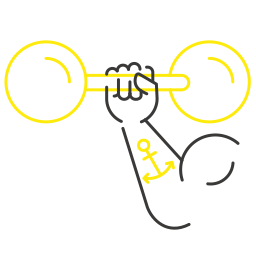
1. extroversion vs introversion
Where people get their energy, either through interaction with others or time to themselves.
2. sensing vs intuition
Whether someone focuses on facts and details or looks more at patterns and possibilities.
3. thinking vs feeling
How decisions are made, either through logic and reasoning or by considering people and impact.
4. judging vs perceiving
Whether someone prefers structure and a clear plan or is more comfortable with change and flexibility.
You’ll see these show up pretty quickly once the session gets going. They influence how people communicate, how they make decisions, and how they contribute.
You can learn more about Myers-Briggs Type Indicator [MBTI] here.
why it works
The real value comes from helping the group understand who’s in the room.
Once people see the different working styles, they naturally adjust. You get better input, better discussion, and better decisions.
It’s a simple step, but it can have a big impact on the outcome of the session.
we’re here to help
If you’re running a strategic workshop or want to get more out of it, we can help guide you through the process.
Reach out to me at j.knight@businessdepot.com.au or give us a buzz on 1300BDEPOT.
want more from us?
If you found this article helpful and want more business advisory insights, sign up to our mailing list below!